

If you’re unexpectedly pregnant and searching for options, you may have learned there are a couple different kinds of abortion procedures: Medical Abortion and In-Clinic Abortion.
Medical Abortion/The Abortion Pill
A Medical Abortion involves the abortion pill(s), and we have a lot of info if you’re considering that. You can read about that on our website, and we’ve also written a blog called The Abortion Pill: Get the Facts.

In-Clinic Abortion/Surgical Abortion
An in-clinic abortion, or a surgical abortion, is a procedure that takes place in an abortion clinic. There are a couple different methods used for an in-clinic abortion.
1. Aspiration Abortion: Your cervix will likely need to be dilated before this procedure takes place. During the procedure, the practitioner uses a medical instrument to remove the baby from the uterus. This typically takes places in the first 12 weeks of a pregnancy [1] and sometimes also involves a sharp curettage instrument, as well. [2]
2. Dilation and Evacuation (D&E): This procedure is more involved than a D&C and involves vacuum aspiration, in addition to use of a medical instrument, to remove the baby from the uterus. This is typically an outpatient procedure, but risks can increase as you get further along in the pregnancy.[3] D&E procedures are typically used after the first trimester. [4]
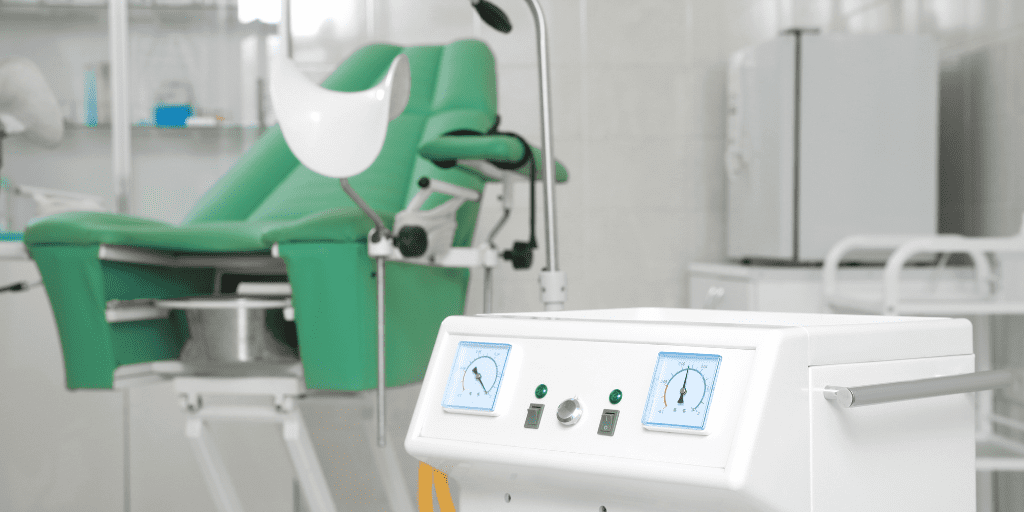
Risks of In-Clinic Abortions
As with any medical procedure, an in-clinic abortion comes with possible risks – both physically and emotionally. According to the Mayo Clinic, “Women who have multiple surgical abortion procedures may also have more risk of trauma to the cervix.” [5] This could potentially cause problems for future pregnancies. Although it’s less common, there is also the possibility of pulmonary thromboembolism. [6]

So What’s Right for Me?
We get it – that’s a lot of information to process. And there’s so much more information to sift through based on the specifics of your situation. But you don’t have to go through it alone.
At PLL, we’re here to help as you figure out what’s next.
No judgment. No cost. Just facts.
We want you to make an informed decision about your pregnancy and know all the resources that are available to you.
Reach out today to schedule a free consultation.
Sources:
- Understanding Manual Vacuum Aspiration. St. Luke’s. (n.d.) https://www.saintlukeskc.org/health-library/manual-vacuum-aspiration
- Dilation and Curettage with Suction. Medscape. (2024, November 1). https://emedicine.medscape.com/article/1848296-overview#:~:text=%22Curettage%22%20refers%20to%20the%20aspiration,of%20first%2Dtrimester%20elective%20abortion.
- Understanding Manual Vacuum Aspiration. St. Luke’s. (n.d.) https://www.saintlukeskc.org/health-library/manual-vacuum-aspiration
- Understanding Dilation and Evacuation (D&E). St. Luke’s (n.d.). https://www.saintlukeskc.org/health-library/understanding-dilation-and-evacuation-de#:~:text=Then%20the%20lining%20of%20the%20uterus%20is%20scraped%20with%20a%20tool%20called%20a%20curette.
- Could an Elective Abortion Increase the Risk of Problems in a Subsequent Pregnancy? Mayo Clinic. (2022, August 3). https://www.mayoclinic.org/healthy-lifestyle/getting-pregnant/expert-answers/abortion/faq-20058551
- Could an Elective Abortion Increase the Risk of Problems in a Subsequent Pregnancy? Mayo Clinic. (2022, August 3). https://www.mayoclinic.org/healthy-lifestyle/getting-pregnant/expert-answers/abortion/faq-20058551